
RF Technology for Skin Tightening – How It Works
A guide to understanding radiofrequency energy, its interaction with dermal collagen, and what current clinical evidence suggests about safety and efficacy for non-invasive skin rejuvenation.
Part 1 Starting From the Basics
Skin firmness depends largely on the strength and organization of collagen and elastin within the dermis (the deeper structural layer of the skin). Over time, natural biological aging and environmental factors such as UV exposure gradually reduce collagen production and weaken its internal structure. The visible result is decreased elasticity, fine lines, and mild to moderate skin laxity – particularly in thinner or frequently exposed areas such as the face, neck, and hands.
Cross-section of skin layers showing the dermis where collagen fibers and fibroblasts reside — the primary target of RF energy.
Topical anti-aging skin care products – including anti-aging cream, anti-aging serum, and anti-aging moisturizer formulations – primarily act on the epidermis (outer layer) and the upper dermis. They are highly effective for improving hydration, barrier function, and surface smoothness. However, their ability to influence deeper structural collagen remodeling is limited.
For this reason, device-based technologies have become an important part of modern non-invasive aesthetic care. Among these, radio frequency (RF) technology gained significant attention as a scientifically supported method for supporting skin tightening and lifting – without surgery or injections.
Part 2 How RF Stimulates Collagen
Radio frequency is a form of electromagnetic energy that generates controlled heat within the dermis. Unlike laser skin lifting treatment systems, which rely on light absorption by specific skin components (chromophores such as melanin), RF energy does not depend on pigment. Instead, it produces heat through natural tissue resistance as a current passes safely through the skin.
Conceptual diagram: collagen contraction and fibroblast activation peak in the 40–45°C range. Temperatures above this window may cause adverse effects.
When dermal temperatures reach a therapeutic range (typically 104-113°F/ 40–45°C under controlled conditions), two main biological responses occur:
Immediate Collagen Contraction
Heat causes partial denaturation (structural tightening) of existing collagen fibers. This can result in a mild, short-term tightening effect.
Delayed New Collagen Formation
Thermal stimulation activates fibroblasts (cells responsible for collagen production), encouraging gradual formation of new collagen over the following weeks or months.
These two processes explain why RF treatments produce gradual improvements in skin firmness and texture rather than dramatic or immediate changes.
Part 3 There's More Than One RF Technology
RF systems differ in configuration, depth of penetration, and intended treatment area. These differences influence safety profiles, comfort, and expected outcomes. Examples of RF platform adaptations include Sensica's own patented technologies:
Dynamic RF™
DRF™ incorporates a massaging component alongside traditional RF energy delivery. The added motion is designed to help distribute RF waves more evenly and allow them to reach deeper layers of the skin.
By combining mechanical massage with RF energy, the treatment aims to stimulate sub-dermal collagen production and heat deeper tissue layers. These processes may help reduce the appearance of wrinkles and fine lines and improve overall skin texture and firmness over time.
During treatment, integrated sensors monitor skin temperature and adjust energy output accordingly to help maintain consistent and controlled conditions.
Lipotherm RF™
Lipotherm RF™ is based on radio frequency technology, which has traditionally been used in clinical settings. The system is designed with widely spaced electrodes intended to allow RF energy to penetrate deeper into the skin, reaching the dermal layers where collagen fibers are located.
As the device is moved across the treatment area, it delivers RF energy alongside continuous massage and mild vibration. This combination is intended to enhance heat distribution within deeper tissue layers. The treatment aims to support microcirculation, promote lymphatic drainage, stimulate collagen production, and influence the volume of adipocytes (fat cells).
These combined effects are intended to improve skin firmness and elasticity and may reduce the appearance of cellulite and body circumference over time.
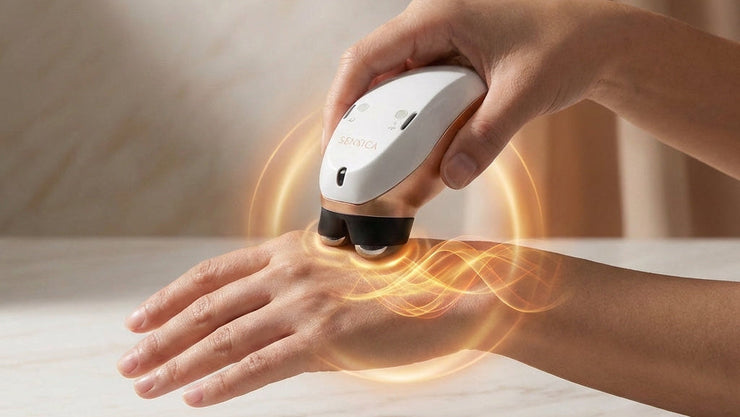
When evaluating a skin tightening and lifting device, it is important to consider how energy is delivered, whether temperature is regulated, which anatomical areas it is designed to treat, and how often treatments are recommended.
Part 4 How RF Compares to Other Technologies
RF technology is one of several non-invasive options people consider when looking into anti-aging treatments. The table below provides a clear overview, comparing RF with other commonly used approaches:
| Modality | Primary Action | Setting | Key Considerations |
|---|---|---|---|
| Topical Therapies | Hydration & surface improvement | At-home | Limited deep collagen remodeling |
| Microcurrent Devices | Facial muscle stimulation | At-home / Clinic | Temporary lifting; requires frequent use |
| Laser-Based Treatments | Collagen stimulation & resurfacing | Clinical | Recovery time; higher per-session cost |
| Injectables & Surgery | Contour alteration / skin removal | Clinical | Invasive; greater risks; longer recovery |
| RF Technology | Deep dermal collagen stimulation | At-home / Clinic | Non-invasive; gradual, natural-looking results |
RF technology offers a non-invasive alternative that aims to stimulate the body's own collagen production without cutting, injecting, or significantly damaging the skin surface. It is often selected by individuals who prefer gradual, natural-looking improvement rather than immediate structural alteration.
Part 5 Treatment Areas and Indications
RF systems are used for both facial and body applications. Common indications include:

Face
Mild to moderate skin laxity, fine lines, perioral wrinkles, early jowl formation, and reduced dermal firmness.

Periorbital area
Carefully designed RF devices may improve fine lines and mild puffiness around the eyes, depending on device specifications and safety guidelines.

Neck
A nonsurgical option to lift sagging skin, particularly effective in early to moderate laxity.

Body
Applications for upper arms, abdomen, thighs, and other areas with mild skin laxity or uneven texture.
In all cases, outcomes tend to develop gradually and depend on consistent adherence to the recommended treatment protocol.
Part 6 What to Expect from a Treatment Plan
RF-induced collagen remodeling develops over time. Most treatment plans recommend weekly or biweekly sessions over a period of 6–8 weeks, followed by maintenance treatments as needed.
Initial sessions begin collagen stimulation.
New collagen production progresses. Skin may begin to feel firmer and smoother.
Full treatment course completed. More defined contours and visible firming may become apparent.
Periodic sessions help sustain collagen renewal and continued improvement.
RF is not an immediate corrective procedure. Appropriate patient selection, realistic expectations, and consistent use are essential factors in achieving visible improvement.
Reported outcomes in clinical and consumer settings may include:
- Improved skin firmness
- Smoother texture
- Reduced appearance of fine lines
- More defined contours
Part 7 Safety Considerations
When used correctly, RF is generally considered safe for a wide range of skin types, since its mechanism does not rely on pigment absorption. Modern RF systems often incorporate multiple safety features designed to protect the user during treatment:
- Built-in temperature sensors
- Automatic energy adjustment
- Conductive gels to improve energy transmission and skin contact
Users must follow manufacturer instructions carefully, including contraindications (for example, individuals with implanted electronic devices or certain medical conditions) and avoidance of restricted anatomical areas.